You're tired of logging symptoms that already derailed your day. The hot flash that hit during your presentation. The brain fog you didn't see coming until you were already in the meeting. Reactive tracking is exhausting — and it offers no strategy for tomorrow. Solena was built to change that. Here's what the AI actually does today, and what we're building toward.
Beyond the Log: Why an AI Predictor Changes the Dynamic
For years, the approach to managing menopause has been passive. You wait, you experience a symptom, you log it. This is the tracking trap — a cycle of data entry that documents your discomfort without giving you any advantage the next time around. It fails at the one thing that matters most: reducing the unpredictability.
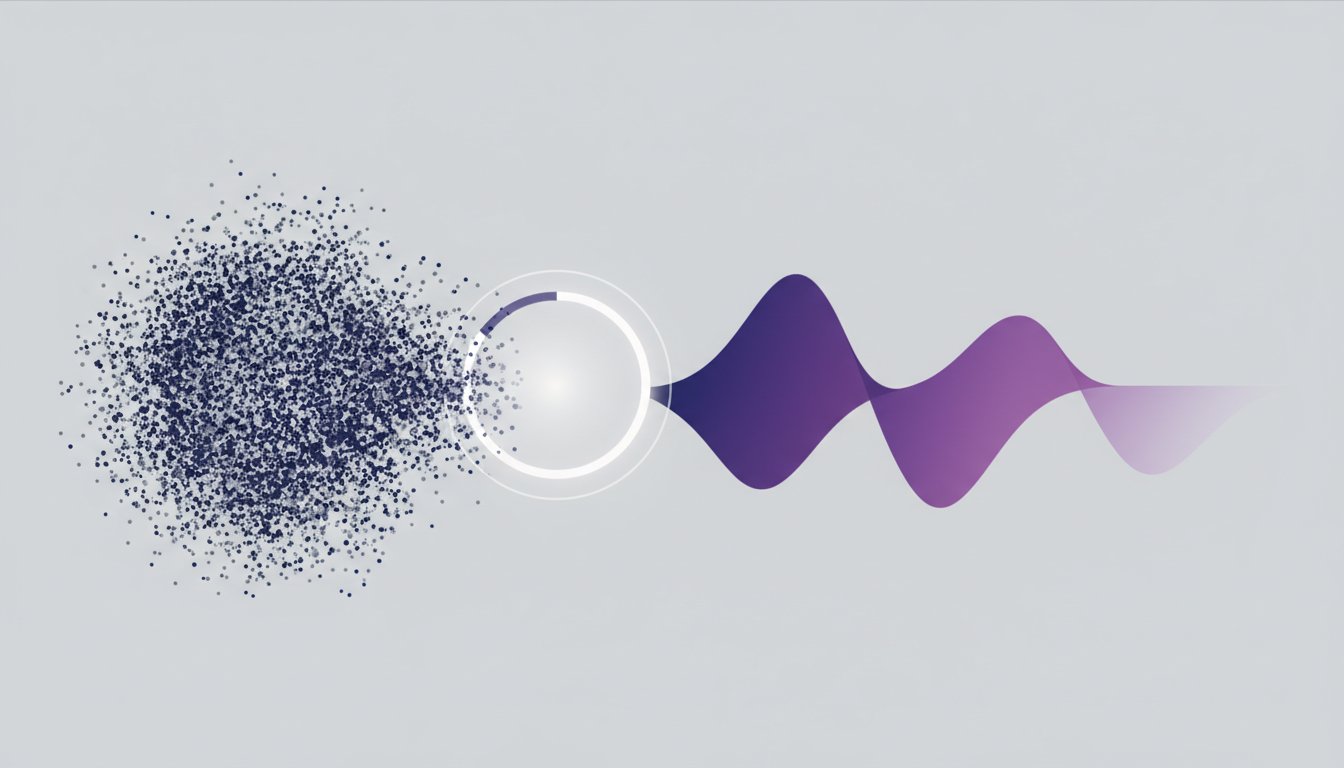
A symptom predictor works differently. Instead of recording what happened, it builds a picture of your personal patterns and uses those patterns to forecast what might happen next. The goal isn't certainty — it's probability, enough to let you plan rather than just react.
The Problem with Traditional Menopause Apps
- Manual entry fatigue: Constant logging leads to burnout. Incomplete data offers little value, and most women stop entering after a few weeks.
- Generic averages: Most apps rely on population data that doesn't capture the specific, often chaotic hormonal fluctuations of an individual woman in perimenopause.
- No forward view: Documenting yesterday's hot flash doesn't help you prepare for tomorrow's. Tracking the past is not a strategy for the future.
How Solena's Pattern Engine Works Today
No two women experience perimenopause in the same way. That's why Solena was built on personal pattern recognition, not population averages. The system learns the specific combinations that tend to precede your symptoms — not the average woman's. Here's the current process:
Your Daily Entries
Each day you log mood, energy, sleep quality, hot flashes, brain fog, and anxiety. The 30-second check-in is the raw material the AI works with. You can also describe your day through the AI companion for richer context.
30-Day Pattern Recognition
After about 30 days of consistent entries, the AI starts identifying your personal patterns — how your symptoms cluster, what tends to follow a poor sleep night, what your body signals before a difficult day.
Tomorrow's Forecast
Solena generates a probability estimate for each of six symptoms the next day: hot flashes, sleep disruption, mood, energy, brain fog, and anxiety. Accuracy starts low and grows with use.
What Wearable Integration Will Add (currently in testing)
When wearable integration goes live — for Oura Ring, Apple Watch, and Garmin — Solena will also draw on passive biometric data: heart rate variability, sleep stages, resting heart rate, and skin temperature. This continuous data stream should significantly improve prediction accuracy and eventually enable a 72-hour forecast window, instead of the current next-day view. Wearable integration is currently in testing and not yet available in the app.
The Feedback Loop
- It gets smarter: The AI engine learns from every entry. It becomes more accurate each week as it identifies your specific triggers and patterns.
- Confirm predictions: When you tell Solena whether a prediction was right or wrong, you're directly improving the model for your data.
- Probability, not possibility: Solena gives you a likelihood score for each symptom — not just "this might happen," but "here's how likely it is based on your history."
Anticipation vs. Tracking: A Framework for Control
The difference between tracking and anticipating is simple but significant. Tracking looks backward. Anticipation prepares you for what's ahead.
| The Old Way (Tracking) | The Solena Way (Anticipation) |
|---|---|
| You log a hot flash at 3 PM after it disrupts your day. | Tomorrow's Forecast flagged a high probability of hot flashes. You prepared ahead of time. |
| You feel exhausted and wonder why. | You saw your sleep pattern shift and adjusted your schedule the night before. |
| You feel like a passive victim of your symptoms. | You feel like a proactive manager of your health. |
The Psychological Advantage of Knowing Ahead
- Less invisible stress: Knowing what's likely coming removes the constant background anxiety of the unknown.
- A difficult day has a reason: It's no longer a mystery — it has a pattern, a context, and a timestamp.
- Clearer communication: Objective patterns help you explain your experience to the people around you.
How the Forecast Helps You Plan
- Protect your best days: When the forecast looks clear, schedule the demanding meetings, the important conversations, the things that require your full presence.
- Protect your difficult days: When the forecast shows a challenging day ahead, give yourself permission to simplify your schedule before it derails you.
- Reduce burnout cycles: Knowing when to rest — before you crash — is worth more than any recovery protocol after the fact.
From Prediction to Action: Your Daily Routine with Solena
Solena fits into your day in five simple steps. The whole daily cycle takes under five minutes.
- 1Log your dayOpen Solena and record how you feel: mood, energy, sleep quality, hot flashes, brain fog, anxiety. Takes about 30 seconds.
- 2Talk to your AI companionAdd context by describing your day in your own words — what happened, how your body felt. This gives the AI richer data to work with.
- 3Read Tomorrow's ForecastAfter about 30 days of logging, Solena forecasts the next day across all six symptoms. Check it each evening.
- 4Adjust your plans accordinglyIf the forecast shows a difficult day ahead, lighten your schedule. If it looks clear, use it fully.
- 5Confirm yesterday's predictionTell Solena whether what it forecast actually happened. That feedback directly improves accuracy for your next forecast.
Solena: What We're Building Toward
Solena today is a daily journal with AI pattern recognition and next-day forecasting for six symptoms. It works without a wearable. It starts generating forecasts after about 30 days of consistent entries.
What we're building toward: wearable integration that adds passive biometric data, a 72-hour prediction window that gives you more time to prepare, and deeper hormonal modeling as we accumulate more data from the women using it. These are currently in testing. Founding members get first access when they launch.
We're accepting 100 founding members. Free access to all active features until December 31st — and first access to everything we're testing.
Join Solena as a founding member →Frequently Asked Questions
Does Solena predict menopause or diagnose conditions?
No. Solena does not diagnose or predict medical conditions. It identifies patterns in daily signals to provide awareness of potential symptom fluctuations.
How accurate are the insights?
Solena provides probability-based insights, not certainties. Accuracy starts around 30% and improves as more personal data is logged consistently over time.
Do I need a wearable device to use Solena?
No. Solena is designed to work using simple daily inputs such as mood, energy, sleep quality, and symptoms. Wearable integration is currently being tested.
How long does it take to see useful insights?
The system starts generating Tomorrow's Forecast after about 30 days of consistent daily entries. The more consistently you log, the more personalized the predictions become.
Is this medical advice?
No. Solena is a pattern-recognition and awareness tool. It does not replace professional medical advice, diagnosis, or treatment.
Can Solena help reduce unpredictability?
Solena aims to help users better understand patterns and anticipate possible fluctuations, supporting more proactive planning.
Is my data private?
User privacy is a priority. Data is encrypted and used only to generate personal insights. It is not sold or shared with third parties.
Who is Solena for?
Solena is designed for women experiencing perimenopause or menopause who want to move from reactive tracking to proactive awareness.